

➜ SITE PREP
SITE PREP IN Decatur, IL
Illinois law requires a JULIE locate before any digging, and finished ground has to fall a full 6 inches within the first 10 feet of a foundation. Lawns to Impress clears, grades, excavates and compacts pads for sheds, garages and slabs across Decatur, IL and Macon County, placing fill in controlled lifts so nothing settles under the new concrete later.
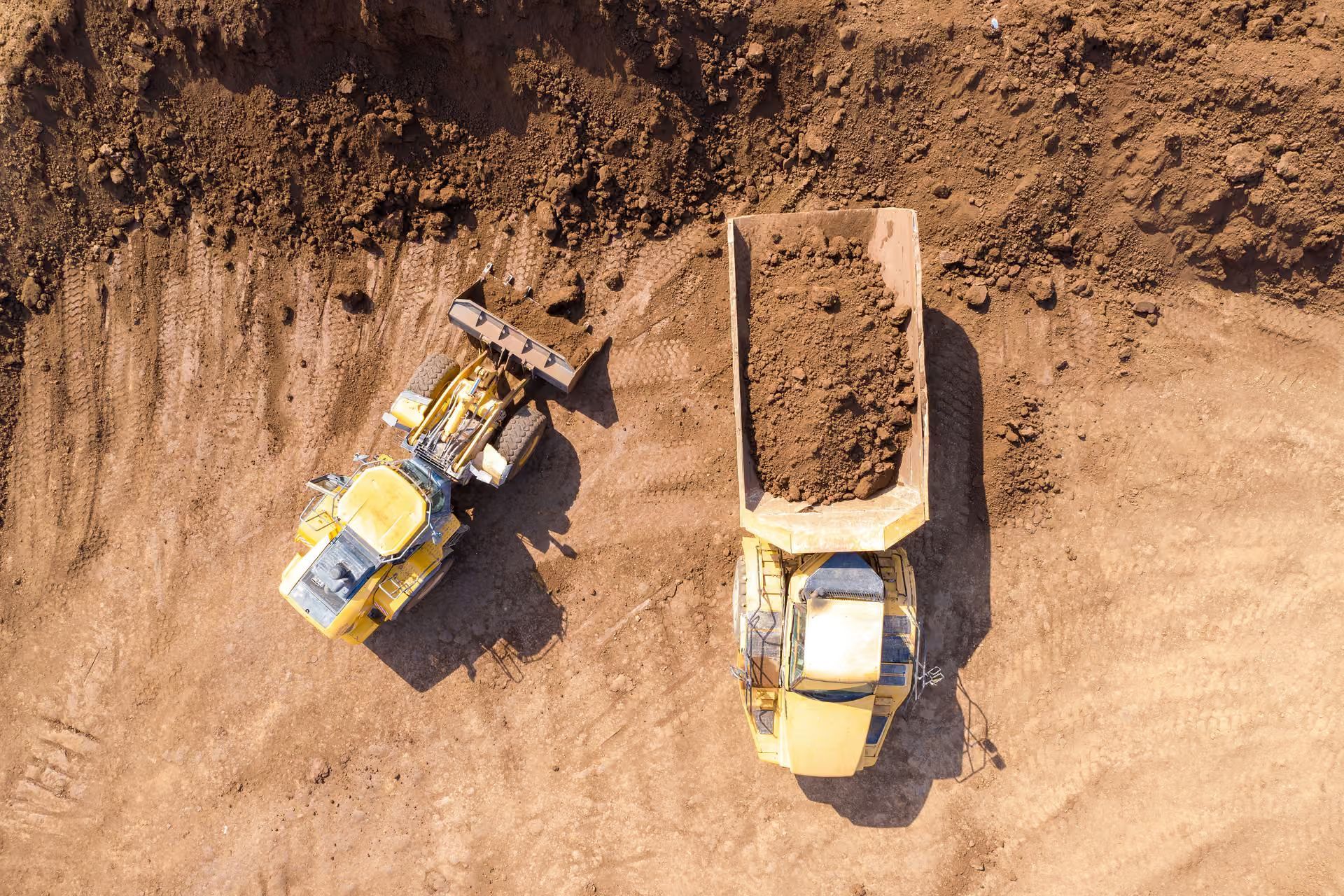
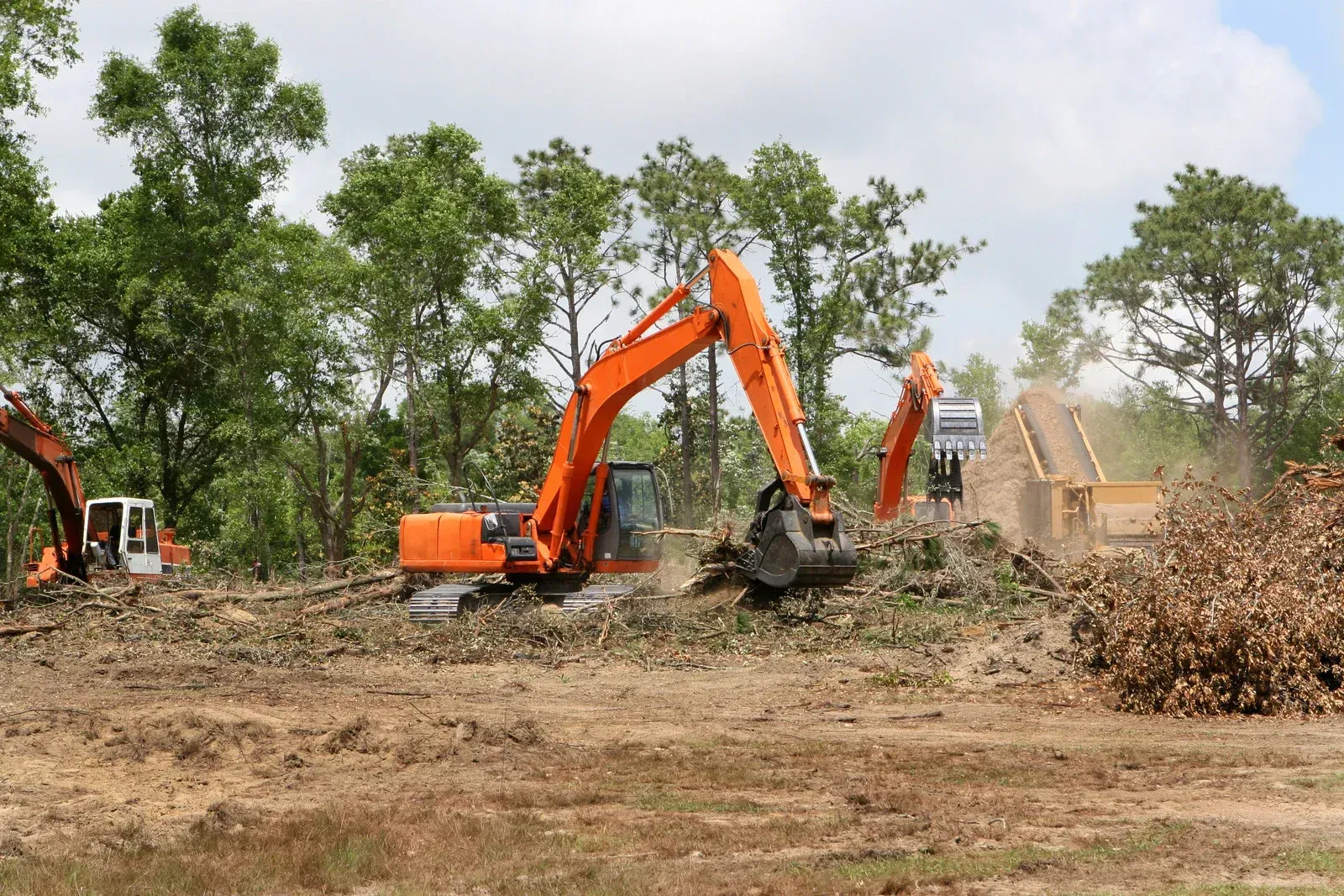
EVERYTHING BUILT ON BAD GROUND MOVES.
Concrete cracks, sheds rack out of square, posts heave and additions settle away from the house. Almost every one of those failures traces back to fill that was never compacted, a subgrade full of organic material, or water that was allowed to run toward the structure instead of away from it. Fixing it later costs many times what preparing it properly costs now.
Code is specific about the fundamentals. Ground has to fall at least 6 inches within the first 10 feet away from a foundation, and fill under a slab has to be free of vegetation and compacted in controlled lifts.
- Insured crews, with utility locates called and the site premarked
- Vegetation and organic material stripped out
- Fill placed and compacted in controlled lifts
- Grade set to drain away from every structure
➜ SITE PREP
A PAD THAT IS READY WHEN THE CREW ARRIVES.
Concrete crews, shed installers and builders all price a job assuming the ground is ready. It usually is not, and the day gets spent fixing that at their hourly rate instead of pouring. We deliver a site that is cleared, cut to elevation, compacted and staked, so the trade that follows can start working within an hour of unloading. Nobody stands around deciding whose problem the mud is.
WE CALL JULIE BEFORE A BUCKET TOUCHES DIRT.
IL law requires notifying JULIE before any excavation, with the dig area premarked in white and at least 2 full working days of notice. Locates expire after 25 days, so timing matters on a project that slips. Digging without marks carries penalties up to $5,000 per violation, and hitting a gas line carries worse than that. We handle the ticket, the premarking and the wait.
THE BORING PARTS ARE THE ONES THAT LAST.
A shed that sank at one corner. A slab poured over topsoil that was never stripped. A garage floor with water running under the door every spring. Those callbacks are not our work, but they are why we insist on doing the boring parts properly. In 5 years the pads we prepared have stayed where we left them, and that is the entire measure of this trade.
WHAT PROPER GROUNDWORK PREVENTS
Slabs That Do Not Crack Early
Concrete poured on uniform, compacted base carries load evenly. Soft spots and uncompacted fill create pressure points where slabs crack, usually in the first two winters and always in the visible middle.
Water Going Somewhere Other Than Inside
Grade set correctly moves runoff away from foundations before it can pool. Getting that fall right at the start is far cheaper than a drain system installed after the basement takes water.
Structures That Stay Square
Sheds, garages and additions rack when one corner settles. A compacted, level pad keeps doors closing, floors flat and roof lines straight for the life of the building rather than the first year.
No Surprise Under The Bucket
Locates, premarking and a careful first pass keep gas, electric, water and fiber where they belong. The alternative is an outage, a repair bill and a fine that dwarfs the cost of waiting two days.
A Schedule That Holds
Trades that arrive to a finished pad start immediately. Every day the concrete truck or the builder spends waiting on ground work is a day added to the project and a bill nobody planned for.
Soil That Stays On The Site
Erosion control during the work keeps mud off the street and topsoil out of the storm drain. It also keeps the site tidy enough that neighbors and inspectors have nothing to raise.
➜ WHAT WE PREPARE
OUR SITE PREP WORK
Groundwork covers everything that happens before the real project starts. These are the pieces we handle, whether the finished result is a shed, a slab or a whole new addition on the lot.
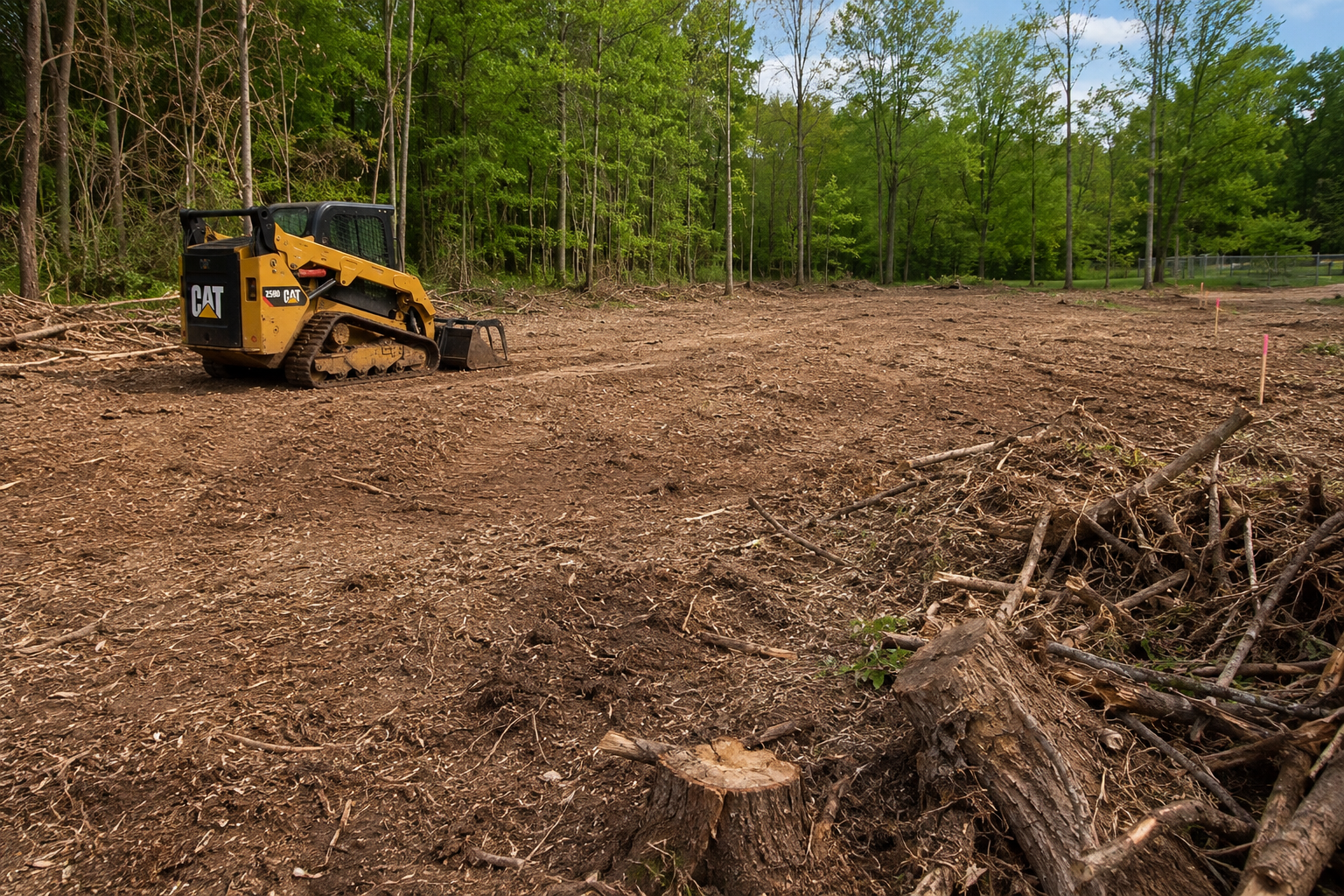
CLEAN SLATE
Land and Brush Clearing
Trees, brush, stumps, old fencing and whatever else occupies the footprint gets removed and hauled. Organic material has to come out entirely, because anything that decomposes later leaves a void under the structure above it.
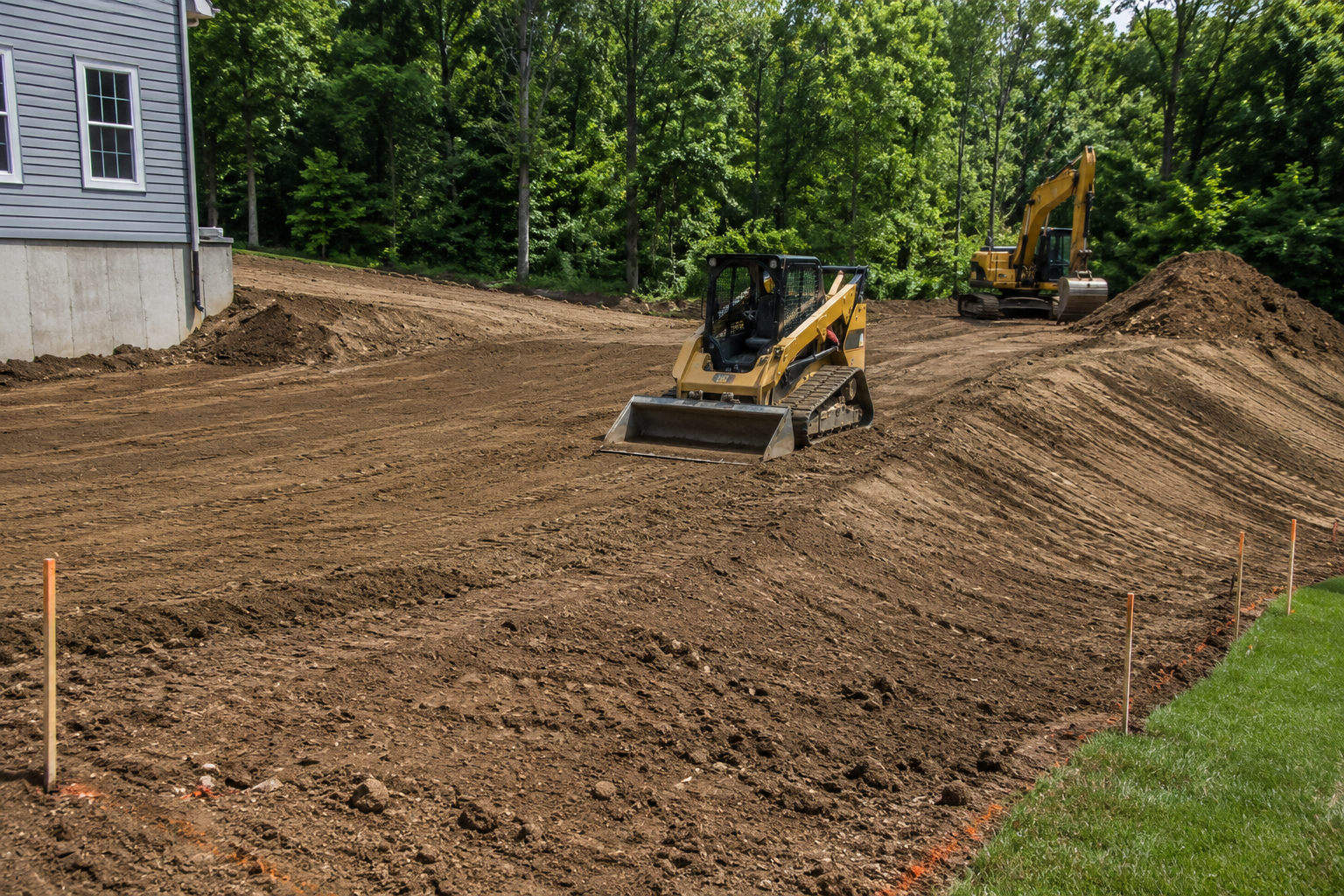
CUT AND FILL
Grading and Excavation
High spots come down, low spots come up, and the whole area gets shaped to the elevation the project needs. Grade always falls away from structures, because that is where every water problem starts or ends.
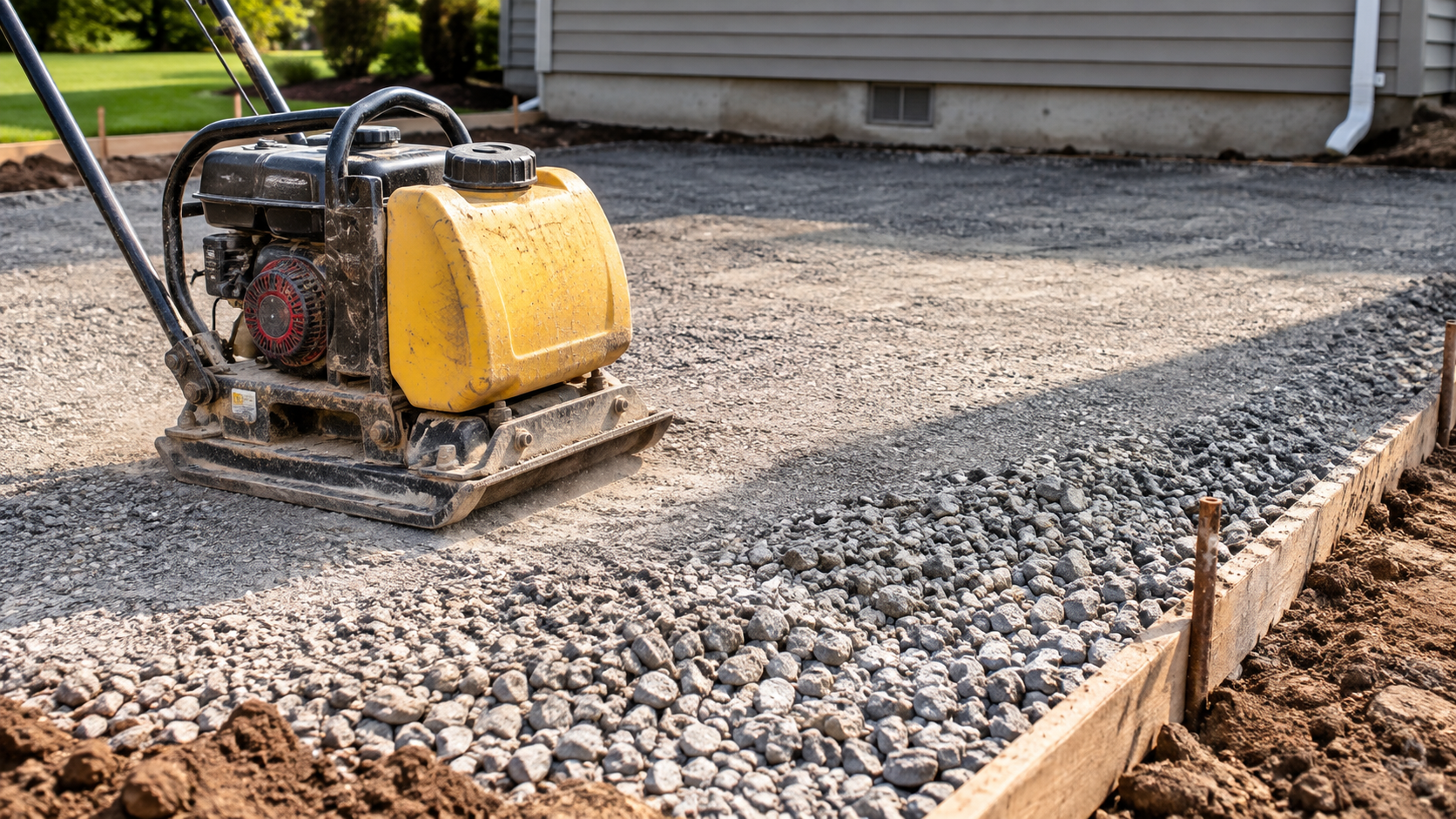
PRESSED DOWN
Compaction and Base Building
Fill goes in as controlled lifts and each one gets compacted before the next, which is what stops future settling. Base stone gets placed and compacted where a slab or driveway is going on top.
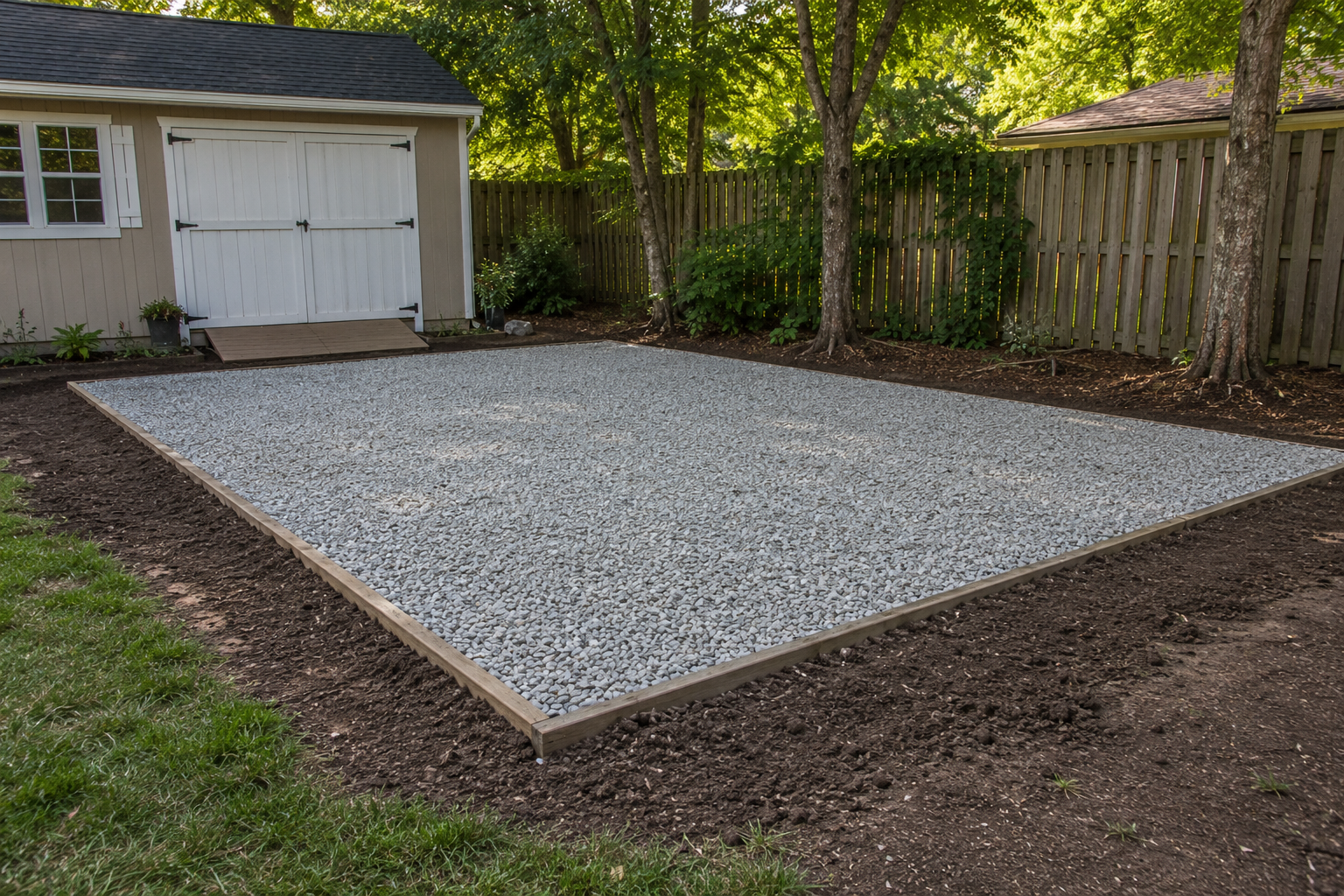
READY TO SET
Shed and Garage Pads
Gravel or stone pads built to the footprint with a few inches of overhang on each side, compacted level and edged. The building arrives to ground that drains instead of holding water underneath it all season.
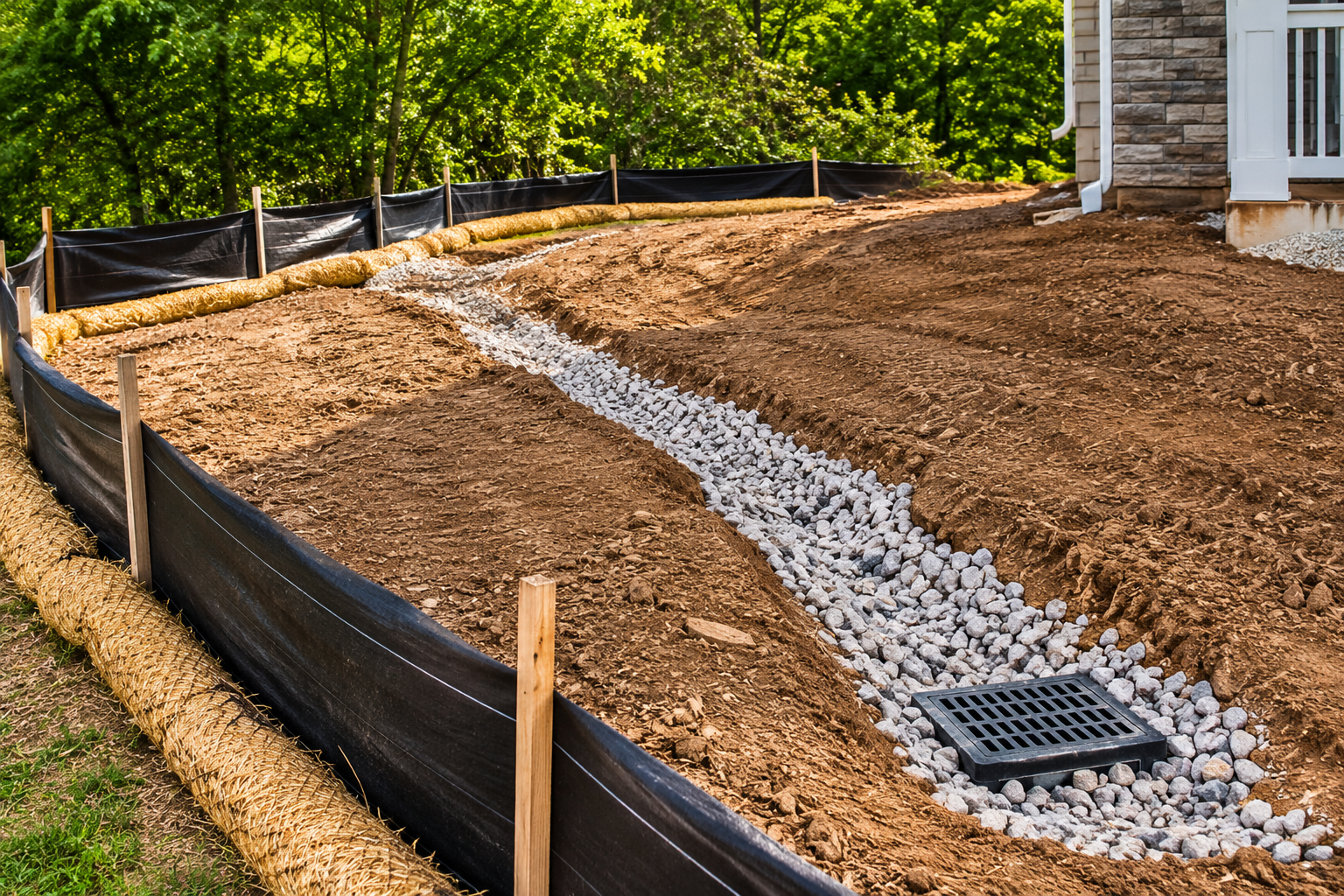
WATER PLAN
Drainage and Erosion Control
Swales, drain lines, silt fence and temporary cover keep water and soil where they belong while the ground is open. Larger disturbed sites have permit requirements, and we plan for them upfront, not halfway through.
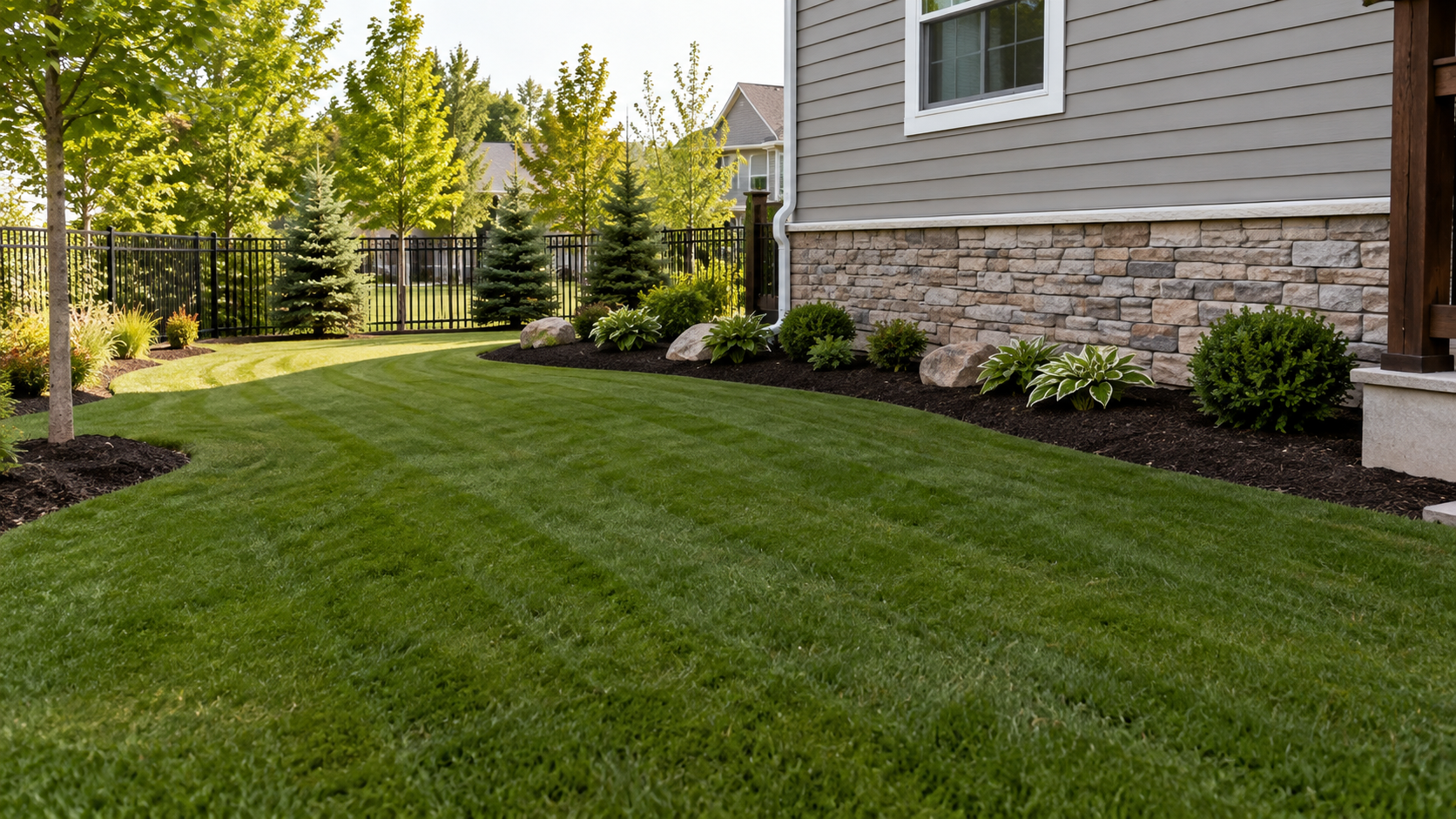
FINAL PASS
Finish Grading and Restoration
After the build, the disturbed ground gets shaped, topsoil returned and the area seeded or sodded. A project is not finished until the yard around it looks like it was never a job site at all.
➜ THE WORD ON OUR WORK
WHAT OUR CLIENTS SAY.
Site work gets noticed by the trades that follow it more than by the client. Builders and concrete crews tell us the pad was where it should be, at the elevation we promised. Read what Decatur clients have said about our groundwork.
➜ Common Questions
FREQUENTLY ASKED QUESTIONS.
Groundwork questions usually come from people about to pour or build something. Here are the answers that save the most money when they arrive early enough to matter.
What is site preparation for construction?
Everything that happens between an empty lot and a buildable surface: clearing vegetation, removing organic soil, excavating to depth, filling and compacting, shaping the grade and setting up drainage and erosion control.
Can you pour a concrete slab directly on dirt?
Not if you want it to last. Code calls for a 4 inch base of gravel or crushed stone over prepared subgrade for slabs below grade. Lawns to Impress builds that base on every pour we prepare in Decatur, IL.
What is the best base to use under a concrete slab?
Compacted crushed stone over a compacted subgrade. It spreads load, breaks capillary rise from wet ground and gives a stable surface that will not shift while the concrete is curing.
How do I compact soil for a concrete slab?
In lifts, with a plate compactor or roller sized to the job. Typical specifications call for 95% of standard Proctor density with lifts no thicker than 8 inches, checked as the work goes.
What is a good slope for yard drainage?
About 2% away from paved surfaces near a building, and roughly 6 inches of fall over the first 10 feet on soil. Past that, a 1 to 2% slope keeps yards draining without looking tilted.
What is the best base to put under a shed?
A compacted gravel pad, 4 to 6 inches thick, extending a foot past the building on every side. Lawns to Impress builds shed pads across Decatur, IL that drain rather than trapping water under the floor.
What happens if I do not call before I dig?
In IL you can be fined up to $5,000 per violation, and you own the repair cost for anything you hit. The notice is free, so there is no version of skipping it that pays off.
How do you prevent soil erosion on a construction site?
Silt fence, temporary seeding, mulch cover and keeping disturbed area small all help. Sites disturbing an acre or more need coverage under the state storm water permit before work starts.
➜ HOW WE WORK
FROM LOCATES TO FINAL ELEVATION, HERE IS HOW.
STEP 01
WE READ THE PLAN
Whether it is a full set of drawings or a sketch on graph paper, we work out the footprint, the elevations and where water is going to go once the ground changes shape.
STEP 02
WE CALL THE LOCATES
The site gets premarked in white, the JULIE ticket goes in, and we wait out the required notice period. Nothing is dug until every utility has marked or cleared the area in writing.
STEP 03
WE CLEAR THE FOOTPRINT
Vegetation, stumps, topsoil and any buried surprises come out of the build area. Usable topsoil gets stockpiled for the finish grade rather than hauled off and bought back later at a markup.
STEP 04
WE CUT TO GRADE
Excavation brings the area to the elevation the project requires, allowing for base thickness and the finished surface. Slopes get set at this stage, because fixing them afterward means moving everything twice.
STEP 05
WE COMPACT IN LIFTS
Fill goes down in layers thin enough to compact all the way through, and each layer gets worked before the next arrives. This is slow, unglamorous and the entire reason the pad holds.
STEP 06
WE HAND IT OFF READY
Final elevations get checked, stakes or forms are set where the next trade needs them, and erosion control goes in. The builder or concrete crew arrives to ground they can start on immediately.
➜ GET YOUR FREE ESTIMATE
PLAN YOUR SITE WORK, FREE.
Send the dimensions of what you are building and a photo of where it is going. We will walk the site, work out what has to move and give you a groundwork price before your builder needs one.
WHAT YOUR SITE PREP ESTIMATE COVERS:
- A walk of the site with your plans in hand
- Clearing, excavation and haul off quantities
- Fill, base material and compaction spelled out
- Utility locates called and waited out
- Grading and drainage away from every structure
- Erosion control and finish restoration